Ponding Water Solutions for Commercial Roofs: Protecting Your Investment
If you manage a business property, you know that keeping your operations running smoothly requires constant vigilance. From fluctuating material costs to supply chain delays, property managers and business owners have enough on their plates. The last thing y'all need to worry about is a compromised roof disrupting your day-to-day operations. However, for those managing commercial buildings with low-slope or flat roofing systems, one specific threat requires your immediate attention: ponding water.
By industry standards, ponding water is defined as any water that remains on a roof for more than 48 hours after a rainstorm. While flat roofs are designed to hold water temporarily before routing it to a drainage system, stubborn pools that refuse to evaporate or drain can spell disaster for your facility. Here in Texas, where unpredictable, heavy downpours are a regular part of life, a minor drainage flaw can quickly escalate into a major operational headache.
Whether you manage a sprawling retail complex or oversee a multi-unit property, ignoring standing water can lead to severe financial consequences. Let's explore why this happens, the risks involved, and the most effective flat roof ponding water repair solutions available to protect your property.
What Causes Ponding Water on a Flat Roof?
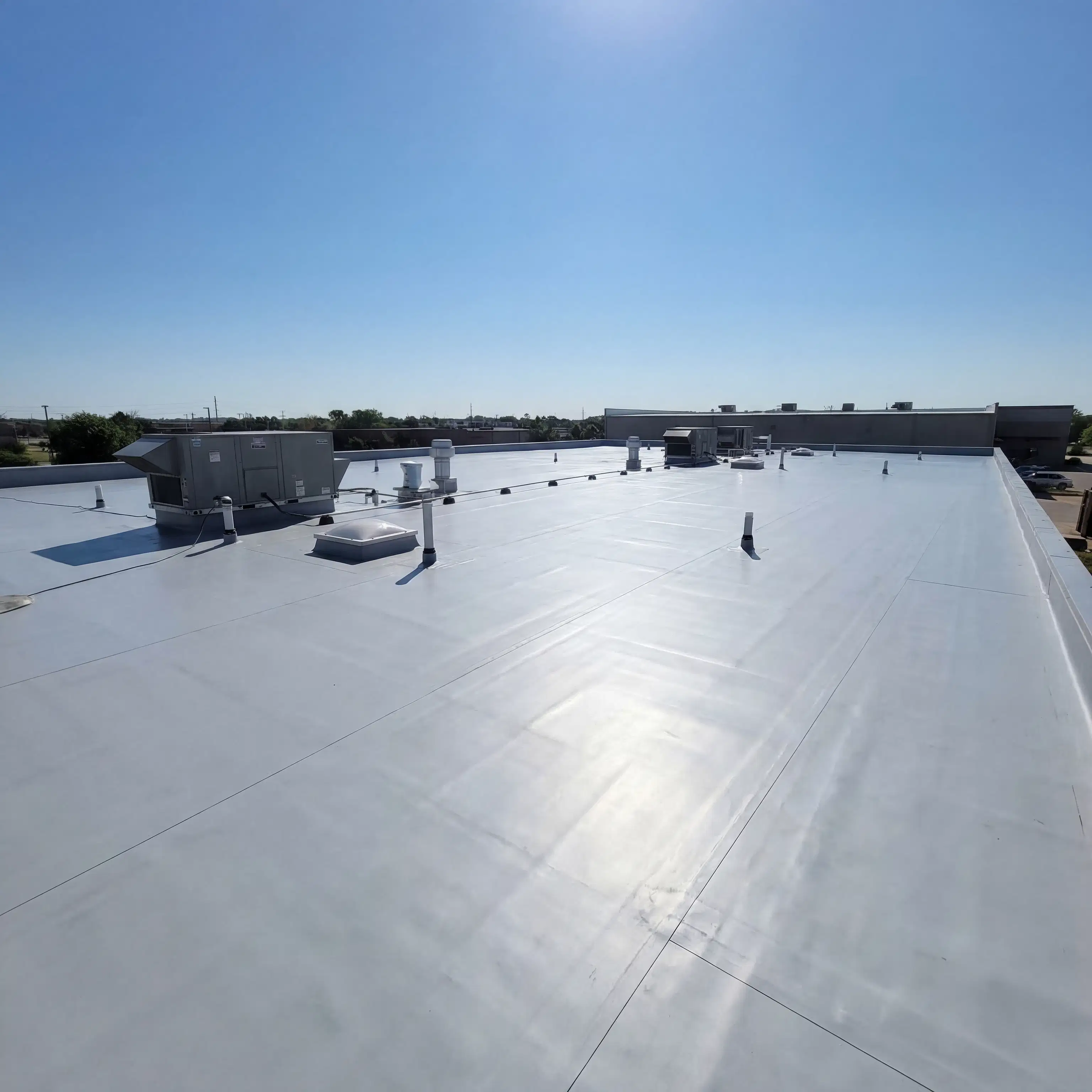
Understanding the causes of ponding water on a flat roof is the first step toward finding a lasting solution. Commercial roofs are engineered with a slight pitch—usually about a quarter-inch per foot—to guide water toward drains, scuppers, and gutters. When water stops flowing, it usually points to one of a few common culprits.
First, structural settling is a frequent issue. Over time, buildings naturally shift and settle. A roof that was perfectly pitched ten years ago might develop subtle low spots, often referred to as "birdbaths," where water inevitably collects.
Second, crushed or compressed insulation can create artificial valleys. Heavy foot traffic from HVAC maintenance crews or the sheer weight of heavy rooftop equipment can compress the rigid insulation beneath your roofing membrane. Once the insulation dips, the membrane follows, creating a basin for rainwater to accumulate.
Finally, poor drainage design or clogged systems are incredibly common. Sometimes, a roof simply doesn't have enough drains for its square footage, or the drains are placed at the highest points of the roof rather than the lowest. More often, drains and scuppers become clogged with debris like leaves, dirt, and branches, effectively damming the water and forcing it to pool on your roof deck.
The Texas-Sized Risks of Standing Water
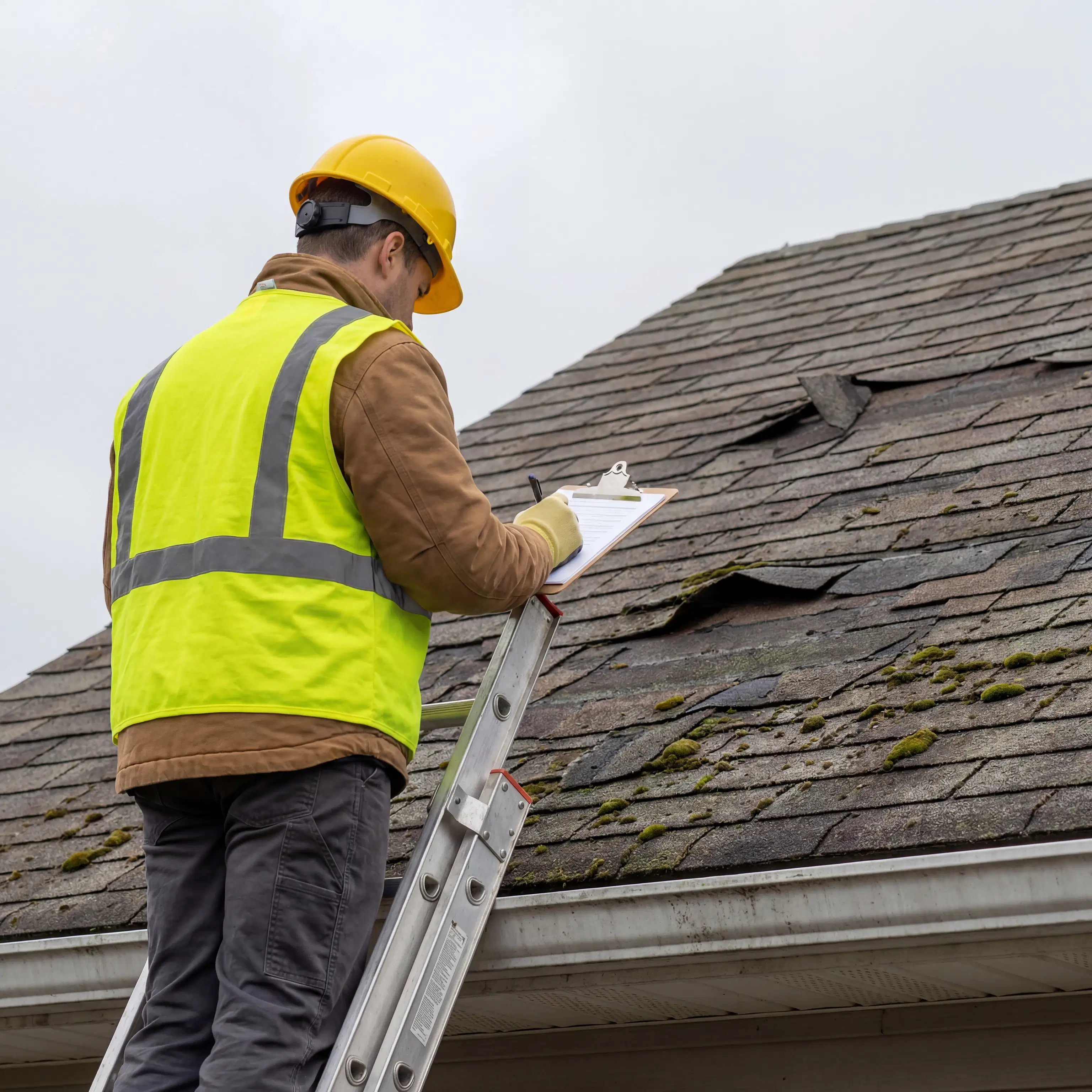
Allowing water to sit on your roof for days on end is a gamble with incredibly high stakes. The primary risk is, of course, active leaks. As water sits, it acts like a magnifying glass for the sun's UV rays, prematurely breaking down your roofing membrane. Over time, this constant wear and tear will degrade the material, leading to moisture intrusion that can ruin inventory, damage interior drywall, and disrupt your business operations.
Moreover, the sheer weight of water is astounding. Just one inch of water across a 10-foot by 10-foot area weighs over 500 pounds. When massive amounts of water pool together, this localized weight puts immense stress on the structural integrity of your building, eventually leading to sagging decking or even catastrophic roof collapse.
It is also worth noting that standing water can void your manufacturer warranties. Most commercial roofing warranties contain clauses that specifically exclude damage caused by ponding water. If a premature failure occurs and standing water is found to be the culprit, your business could be left covering the entire replacement cost out of pocket.
To help you avoid these pitfalls, Creekview Roofing utilizes modern technology, including drone inspections and video-recorded roof assessments. We believe you should see exactly what we see. Our three-step inspection covers the interior for signs of moisture, the ground level for structural context, and the roof itself. We assess membrane health, penetrations, and ventilation, providing you with a clear, color-coded report (green for good, yellow for repair, red for replacement) so you can make informed decisions.
How to Fix Standing Water on a Commercial Roof
When property managers ask us how to fix standing water on a commercial roof, they are often worried that a full roof replacement is the only answer. At Creekview Roofing, our philosophy is to prioritize repairing and restoring commercial roofs whenever possible, only recommending replacement if a repair is truly unfeasible.
One of the most effective solutions is the installation of roof crickets. Crickets are rigid, triangular structures installed beneath the roofing membrane, usually behind large rooftop units or between drains. They act as diverters, actively channeling water away from flat spots and toward your primary drainage systems.
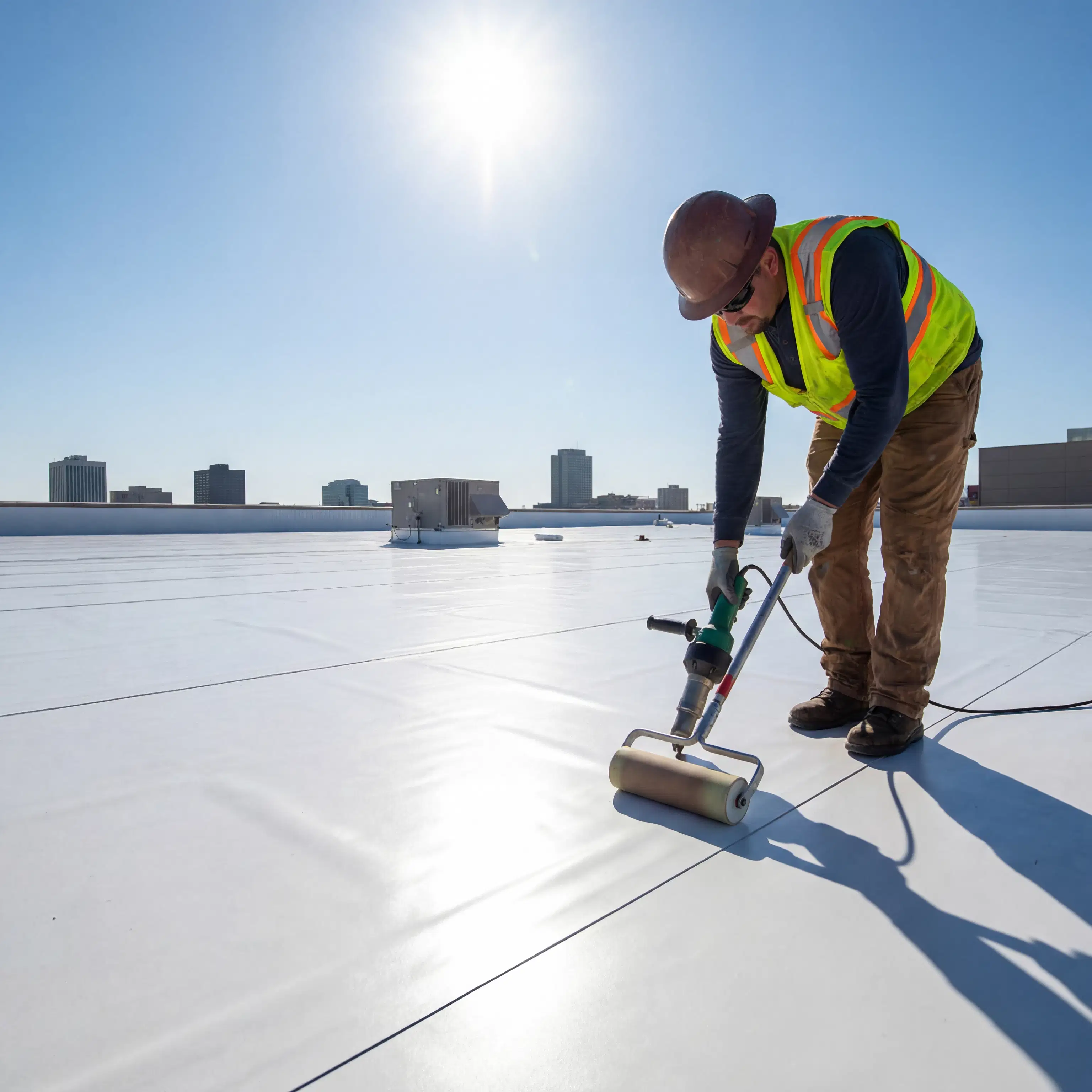
Another approach involves re-pitching specific areas using leveling compounds or tapered insulation. If a section of insulation has been crushed, we can carefully peel back the membrane, replace the compromised insulation with a tapered alternative to restore the proper slope, and meticulously re-weld the area. This is a highly effective part of our TPO roof repairs, ensuring a watertight seal without the cost of a total tear-off.
For roofs that simply lack adequate drainage capacity, adding auxiliary drains or enlarging existing scuppers can drastically reduce water accumulation. We evaluate your roof's unique architecture to determine if retrofitting new drainage pathways will solve the root cause of the ponding.
For facilities with extensive surface degradation, we often recommend professional roof coatings and restoration systems. As certified installers for Karnak, Raintek, IKO Commercial, and Versico, we can apply advanced silicone or acrylic restorative coatings. These not only eliminate minor ponding issues but also provide enhanced, manufacturer-backed warranties that protect your bottom line for years to come.
Whether you manage a traditional office park or require specialized storage facility roofing, addressing drainage problems proactively is the smartest financial move you can make. You shouldn't have to navigate commercial property maintenance alone. If you are noticing persistent pools of water on your facility's roof, reach out to the dedicated team at Creekview Roofing. We will provide a transparent, video-documented inspection and develop a customized repair plan to keep your business dry, safe, and focused on what matters most.