
The Unseen Culprit: Why Proper Attic Ventilation is Your Roof's Best Defense Against Leaks
Here in Richmond, we all know how relentless the Texas sun can be. We crank up the A/C and do our best to stay cool, but have you ever considered what that intense heat is doing to your roof? The answer might surprise you. It’s not just the shingles on top that take a beating; it’s what’s happening in the unseen space right below them—your attic. Many homeowners think of their attic as just a storage space, but it’s actually a critical component of your entire roofing system. When it can't breathe properly, it can set off a chain reaction that leads to premature aging, structural damage, and yes, even those dreaded water stains on your ceiling. This post will explain how proper attic ventilation is one of the most important investments you can make to prevent costly roof leaks and protect your home.
Your Attic: A Pressure Cooker of Heat and Moisture
Think of your attic on a hot summer afternoon. The sun beats down on your roof, and that heat radiates directly into the attic space, causing temperatures to soar to 150°F or higher. At the same time, moisture from inside your home—from cooking, showers, and even breathing—naturally rises and gets trapped in that same space.
Without a way to escape, this combination of extreme heat and humid air creates a hostile environment. This superheated, moist air becomes a constant source of stress on your home's structure. It's a slow, silent process, but it relentlessly attacks the very materials designed to protect you from the elements. This trapped moisture is the primary culprit that begins the process of breaking down your roof from the inside out.
The Chain Reaction: How Trapped Moisture Leads to Leaks
So, how does a stuffy attic actually cause a leak? It happens through a damaging sequence of events:
-
It Rots Your Roof Decking: The wooden sheathing that forms the foundation of your roof, known as the decking, is the first victim. Constant exposure to high humidity can cause the wood to absorb moisture, leading to rot, mold, and mildew. A soft, spongy deck can't hold nails effectively, compromising the entire structure.
-
It Cooks Your Shingles: The intense heat buildup in the attic essentially bakes your asphalt shingles from underneath. This extreme heat accelerates the aging process, causing the shingles to become brittle, curl at the edges, and crack. These damaged shingles are no longer an effective barrier against rain.
-
It Creates a Pathway for Water: Once the shingles are cracked and the decking beneath is weakened, you have a perfect recipe for a leak. During the next heavy rain, water can easily seep through the compromised shingles, penetrate the rotted decking, and find its way into your home. What you see as a small water spot on the ceiling is often the final symptom of a ventilation problem that has been developing for years.
The Solution: A Balanced Airflow System
A healthy roof needs to breathe, and it does so through a balanced ventilation system. This isn't just about having a few vents; it's about creating a continuous, passive flow of air. A proper system has two key parts:
- Intake Vents: Located at the lowest part of your roof (usually in the soffits or eaves), these vents draw in cooler, drier air from the outside.
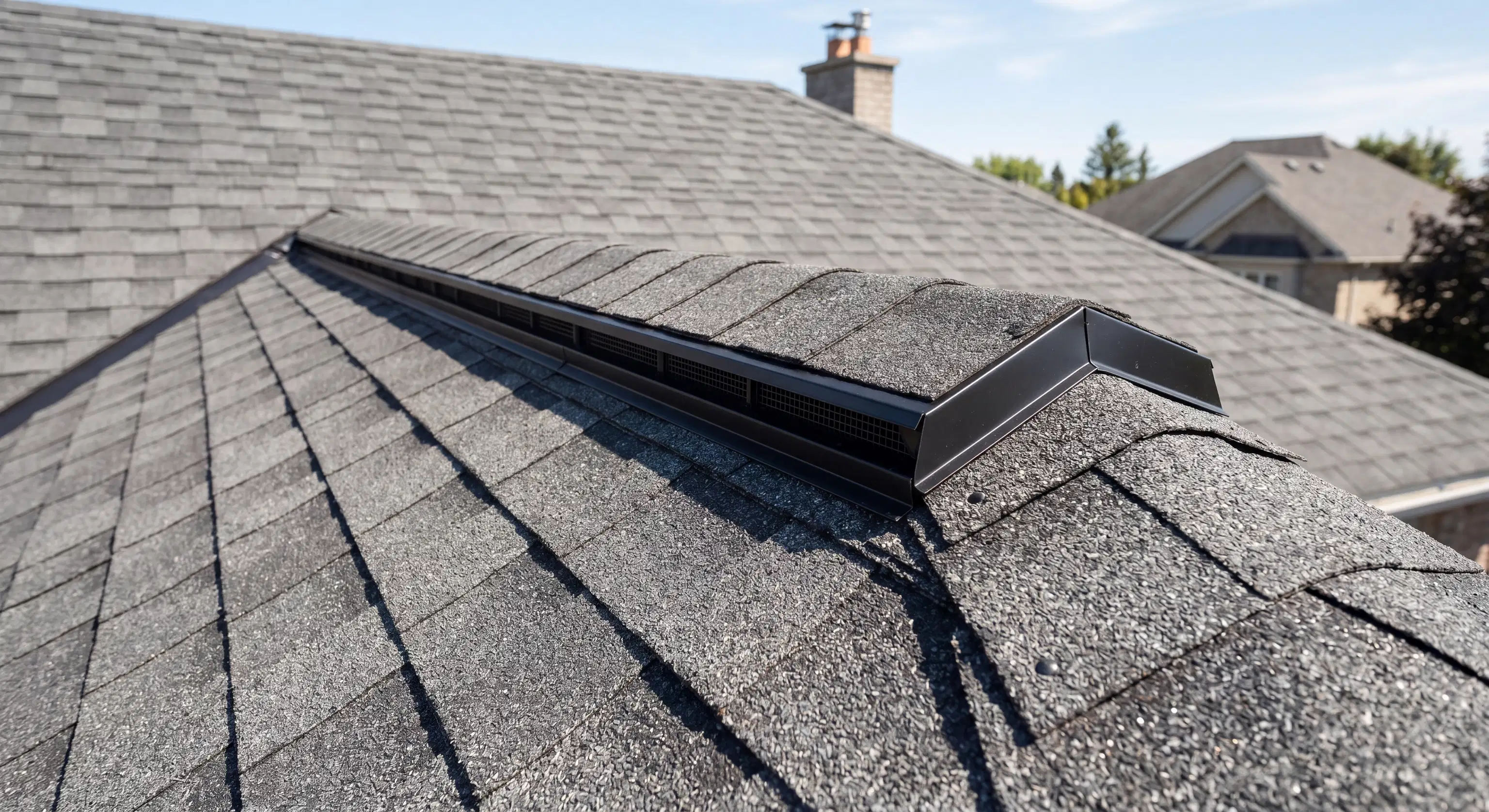
- Exhaust Vents: Located at or near the highest point of your roof (like ridge vents or turbines), these allow the hot, moist air that has risen to the peak to escape.
This creates a natural airflow that constantly flushes out the damaging heat and moisture, keeping your attic cooler and drier. At Creekview Roofing, we use the GAF ventilation calculator to ensure every home in Fort Bend County has a system that is perfectly sized and balanced, protecting the roof's longevity and even helping to lower energy bills by up to 20%.
Is Your Attic Trying to Tell You Something?
How can you tell if your home has poor attic ventilation? Y'all should keep an eye out for these common warning signs:
- Soaring Summer Energy Bills: Your A/C unit has to work much harder to cool your home when it’s fighting against a superheated attic.
- Curling or Cracking Shingles: If your shingles look prematurely aged, your attic heat may be to blame.
- Rust on Nails or Metal in the Attic: Any signs of rust on metal fixtures or nail heads in your attic is a clear indicator of excessive moisture.
- Damp or Frosty Insulation: In the winter, moisture can condense and freeze on your insulation, reducing its effectiveness and indicating a moisture problem.
- Warped or Dark-Stained Roof Decking: If you can safely peek into your attic, look for wood that appears warped, saggy, or has dark water stains.
If you notice any of these signs, it’s a strong indication that your attic isn't breathing correctly and your roof could be at risk.
Protect Your Roof from the Inside Out
A roof leak is rarely a sudden event; it's often the result of long-term issues like poor attic ventilation. By ensuring your attic has a balanced system to manage heat and moisture, you are taking the single most effective step toward extending the life of your roof and preventing costly water damage.
If you're concerned about your attic's airflow or have noticed any of the warning signs, don't wait for a leak to force your hand. The experts at Creekview Roofing provide comprehensive roof inspections, professional ventilation analysis, and expert attic venting repairs. Contact us today to schedule a free, no-obligation inspection for your Richmond home and let us help you protect your most important investment.